

 Español
 Deutsch
Guangdong Qman Toys Industry CO.Ltd, filled an application for a declaration of invalidity of the EU design described as “Building blocks from a toy building set”. The grounds for the declaration of invalidity were the lack of individual character, as the contested design did not produce on the informed user a different overall impression from a prior design reproduced on a website and corresponding to the representation of another piece of a toy brick construction set.
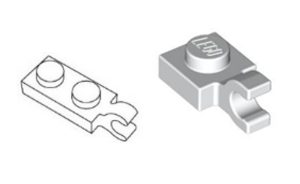
On 28 November 2022, the Invalidity Division declared the contested design invalid. However, on January 2023, Lego A/S filed a notice of appeal against the aforementioned decision. The Board of Appeal dismissed the appeal as the designs at issue coincided in their main features. LEGO put forward a single plea in law alleging that the Board of Appeal did not give sufficient weight to the significant and immediately visible differences, making an error of assessment in concluding that the designs at issue produced a similar overall impression on the informed user.
The assessment of individual character of an EU design takes into consideration the sector to wich the products is intended to be incorporated, the informed user of those products, the designer’s degree of freedom and the outcome of the comparison of the overall impressions produced on the informed user by the contested design and by any earlier design which has been made available to the public.
The sector to which the contested design is intended are modular systems.The informed user is whoever habitually purchases such items, puts them to their intended use, possesses a certain degree of knowledge and shows a relatively high level of attention. The designer’s degree of freedom is limited by the interoperability requirement, which means that the blocks must be capable of connecting with one another. However, it does not limit the general appearance of the visible features of those blocks, not all of which are dictated by their technical function.
From the comparison of the overall impressions produced by the designs at issue, The General Court concludes that the fact that the rectangular shape of the contested design is twice as long as the square shape of the prior design is not sufficient to produce a different overall impression on an informed user. LEGO argues that the designs at issue present differences on the underside. However, building blocks are designed to interlink with other blocks, in such a way that, at least in part, the upper faces remain exposed for longer than the lower faces, on which the entire toy building set rests. The underside will remain visible to the user for a short time as it fulfils an essentially technical function. Once that block has been assembled with another block forming part of the same modular system, the informed user will no longer be able to see the underside view of that block.
In those circumstances the central cylindrical element is a minor detail of the contested design in the overall impression created by the designs at issue. The informed user will therefore not pay particular attention to it, since the comparison of the designs at issue placed side by side shows mainly that they coincide in thickness. Therefore, the only difference resulting from the presence of the central cylindrical element in the contested design is not sufficient to create a different overall impression on the informed user.
For all of the above mentioned reasons, the applicant’s claim must be rejected and the action brought against the invalidation must be dismissed.
Judgment of the General Court (Second Chamber) of 14 January 2026, in case T-628/24