

 Español
 Deutsch
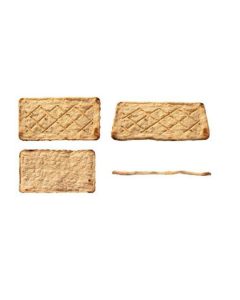
Grupo Bimbo S.A.B, de C.V took legal action against the decision of the Spanish Patent and Trademark Office (SPTO) dismissing the appeal against the refusal of the three-dimensional trademark application M4153054 for flour or corn tortillas. The application was rejected on the grounds of insufficient distinctiveness, as the trademark’s shape was common for this type of biscuit or snack. The applicant also based its application on its previous three- dimensional trademark rights consisting of the product packaging, which included a representation and descriptive explanation of the product as: “Baked corn snack”.
Trademark applied for:
Previous trademarks (EUTM):
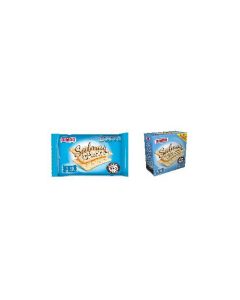
The SPTO rejected the principle of registration continuity on the grounds that there was no identity between Grupo Bimbo’s priority trademarks and the trademark applied for. This is because the trademark function of the registered signs cannot be separated from the terms ‘Bimbo’ and ‘Salmas’, both of which are missing from the applied-for sign. Furthermore, the appellant itself stated that the alleged trademarks ‘protect the shape of the product packaging through the Salmas trademark.’
Bimbo appealed against the SPTO decision, arguing that the trademark applied for was distinctive due to its unusual rectangular shape for the products of this type, which are usually circular. Bimbo also argued that the principle of registration continuity should apply due to its previous trademarks, given that the contested sign appears on the product’s packaging as an equally important element to ‘BIMBO’ or ‘SALMAS’, which it now seeks to protect through the trademark application. However, these arguments were rejected by the Provincial Court, which dismissed the appeal on the grounds of lack of distinctiveness and failure to apply the principle of registration continuity. This is because, if the other previously registered signs were removed, the trademark applied for would merely be perceived as a decorative element and would be incapable of indicating the commercial origin.
In response to this judgement, Grupo Bimbo filed an appeal arguing that the assessment of the distinctiveness was unnecessarily exhaustive given the trademark’s three-dimensional nature. Moreover, the applicant argued that the principle of registration continuity had been violated, as it considered that the registration of priority trademarks should cover the use and registration of similar and subsequent trademarks in favour of the same owner.
Regarding the assessment of three-dimensional trademark distinctive character, the Spanish Supreme Court stated that the same criteria applied to any national mark should also apply in this case. Therefore, the square shape of the tortillas does not constitute a significant divergence from the sector’s norm or customs, and distinctiveness cannot be assessed. Regarding the principle of registration continuity, the Spanish Supreme Court concluded that there had been no infringement of this principle as it has no legal basis in the Spanish legal system. Furthermore, the court concluded that it could not apply, as there were no intermediate trademarks opposing the registration, and this principle is unrelated to the examination of distinctiveness. Additionally, there can be no question of continuity when the earlier trademarks are completely different from the trademark applied for.
For all of the above reasons, the Spanish Supreme Court dismisses the appeal filed by Grupo Bimbo, since the trademark applied for lacks distinctiveness and the principle of registration continuity does not apply.
Spanish Supreme Court Judgment 1222/2025 of 15 September 2025