

 Español
 Deutsch
Inditex filed an application for a Spanish figurative trademark consisting of the initials “PB” (referring to Pull & Bear) to distinguish goods and services in classes 25 and 35. In response to this application, Lyetsa filed an opposition, arguing that the application conflicted with its earlier registrations relating to the “Punto Blanco” product line, for which it holds various figurative trademarks including the initials PB.
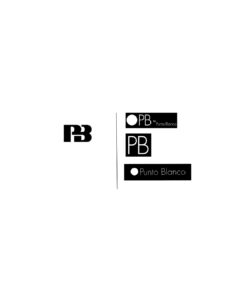
However, the opposition filed by Lyetsa was dismissed on the grounds that no similarity was found between the earlier trademarks and the application submitted. While it is true that the registered signs contain the letters ‘PB’, it was concluded that the letters could not be the subject of exclusive use. In this regard, the Spanish Patent and Trademark Office (OEPM) argues that no similarities can be discerned between the signs because the opponent’s signs contain other distinctive elements, and the graphic configuration of the letters differs in the signs at issue. Therefore It is concluded that there are sufficient graphic, phonetic and word-based differences between the signs, creating a clearly distinct overall impression, thereby allowing the signs to coexist peacefully on the market.
Lyetsa insists that the trade mark applied for gives rise to a likelihood of confusion because there is a similarity between the signs and an identity and similarity between the goods and services they designate, causing a likelihood of confusion and association, in addition to the relative ground for refusal of registration due to the reputation of the earlier trade marks.
In this regard, the Provincial Court ruling on the appeal agrees that the analysis of similarity must be based on the fact that the letters of the alphabet cannot be claimed as exclusive, such that the mere coincidence of the letters ‘PB’ is not sufficient to establish similarity between the signs; rather, the characteristic design of each sign must be taken into account.
In the present case, it is concluded that the signs are distinct, as the typography differs between the signs in question. The earlier trade marks features a finer white stroke on a black background, while the trademark applied for features thicker, more rounded black letters on a white background. Furthermore, in several of the earlier trade marks, the initials ‘PB’ appear alongside other elements, such as the name ‘Punto Blanco’ or a white dot. Therefore, given the non-distinctive nature of the letters and the differences in their representation, the Provincial Court considers that these are different signs, and as such they are compatible as they do not give rise to any likelihood of confusion among the public. These are signs whose overall impression is clearly distinct.
Furthermore, the Provincial Court rejects the application of the registration prohibition relating to the well-known status of the earlier trademarks because, firstly, it finds no similarities between the conflicting signs, and because the appellant appears to be referring to the well-known status of ‘Punto Blanco’ rather than that of the trade mark ‘PB’, which is, in any event, the one that most closely resembles the trade mark granted.
For all these reasons, the Provincial Court dismisses the appeal lodged by Lyetsa, thereby confirming the registration of the trademark applied for.
Judgment of the Provincial Court of Barcelona (Section 15) No. 422/2026 of 14 April 2026