

 Español
 Deutsch
In 1996, the Roncato brothers divided control of their companies, which were primarily engaged in the manufacture and sale of suitcases. To this end, they reached an agreement in which they undertook not to cause confusion regarding the products and trademarks marketed under the common name ‘Roncato’.
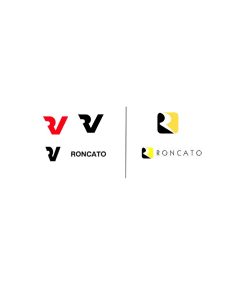
However, the company VALIGERIA RONCATO S.P.A.,(hereinafter VALIGERIA), owned by one of the brothers, brought an infringement action against the other brother’s company, BAULIFICIO ITALIANO SORELLE RONCATO S.R.L., (hereinafter referred to as BAULIFICIO) for the unauthorised sale of suitcases bearing the Roncato trademark in certain Spanish supermarkets and on the Amazon platform. According to the claimant, such use was not covered by the trademark owned by BAULIFICIO because it did not designate goods in Class 18 (specifically suitcases), as the defendant was only permitted to market suitcases under the figurative mark lacking the word RONCATO.
The claimant sought a declaration of exclusivity regarding the use of its trademarks, the revocation of any agreement involving the shared use in Spain of trademarks containing the RONCATO designation, and the revocation of any authorisation previously granted by the claimant to the defendant. Alternatively, the defendant was to be found to have breached the 1996 agreement by exceeding its powers. Furthermore, it was requested that, following a declaration of infringement of the claimant’s trade marks, the defendant be ordered to cease the infringing conduct, to withdraw from the market and destroy the products incorporating the infringing signs, and to compensate the claimant for the damages arising from the infringement of the trade marks.
Nevertheless, the claim was initially dismissed because the 1996 agreement did not concern the use of the earlier trademarks (owned by VALIGERIA); but rather, it concerned the non-confusable use of the patronymic and constituted an irrevocable agreement for peaceful coexistence, rather than granting consent to use a third party’s trademark. Having concluded that there was no likelihood of confusion, the claim of infringement was dismissed. On appeal, the Provincial Court noted that the agreement provided for the shared use of the RONCATO name on an equitable basis, provided this did not cause confusion among the relevant public. The court concluded that the disparity between the signs precluded any likelihood of confusion that would give rise to an infringement claim. BAULFICIO was using its own registered graphic sign in a slightly different manner for class 18 (specifically suitcases), without altering the distinctive character of the registered trademark.
The claimant lodged an appeal with the Spanish Supreme Court, primarily arguing that it had the right to withdraw from the agreement and that the Provincial Court’s interpretation of the agreement was incorrect, since such interpretation did not reflect the parties’ intentions. Moreover, the claimant considered that withdrawing from the agreement implied the full restoration of the right to prohibit arising from its earlier trademarks registrations.
However, the Spanish Supreme Court considered that the Provincial Court’s interpretation of the 1996 agreement was consistent with the parties intentions and it was based on the literal wording of the agreement. The term RONCATO is not just the surname of the conflicted brothers, but is also the common element of their companies. Thus, given the specific circumstances of the case (both brothers were co-owners of the companies and participated equally in the business), it can be concluded that the intention of both parties was to share the common name RONCATO on an equal basis. Furthermore, the division of the companies took place on the condition that both brothers could use the well-known term ‘RONCATO’, which has a special value and recognition in the luggage market.
The agreement presupposes that both parties recognise their entitlement to use the name RONCATO. However, it does not imply, as the claimant contended, that VALIGERIA had relinquished a prior right that belonged solely to it. In an agreement such as that reached by the parties, neither party has the right to unilaterally withdraw and render the agreement null and void.
The Spanish Supreme Court upholds the contested decision, as both brothers are entitled to use the RONCATO name, having agreed to do so. Furthermore, the differences in the additional graphic elements mean that the signs cannot be described as identical or similar. Consequently, the claim for trademark infringement is dismissed in its entirety, as are the alternative claims.
Judgment of the SpanishSupreme Court (Civil Chamber) No. 214/2026 of 12 February 2026